
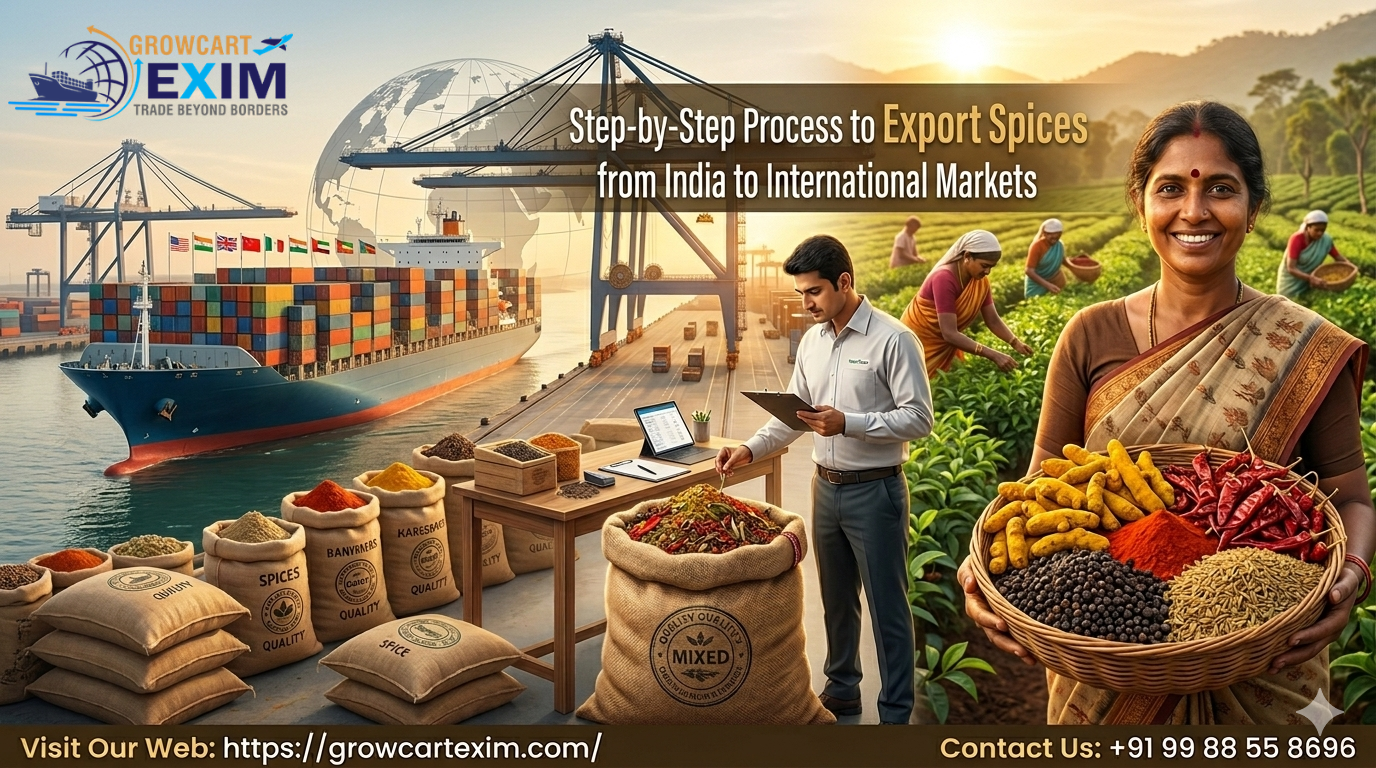
Export spices from India
India holds a prestigious position on the global stage, proudly recognized as the "Spice Bowl of the World." This reputation is not merely symbolic; it reflects India's dominance as the largest producer, consumer, and exporter of spices worldwide. The country offers an incredible variety of spices, ranging from the earthy richness of turmeric and cumin to the sweet aroma of cardamom, the sharp intensity of black pepper, and the bold heat of red chili. These spices are deeply rooted in India's agricultural heritage and cultural identity, making them extraordinarily sought-after across every continent.
In recent years, the demand for Indian spices has surged significantly, driven by a confluence of powerful global trends. One of the most influential factors is the growing awareness of the health benefits associated with spices. Turmeric, for example, is globally recognized for its anti-inflammatory and antioxidant properties, while ginger is celebrated for its digestive and immunity-boosting effects. As consumers worldwide become increasingly health-conscious, the appetite for natural, functional food ingredients continues to climb at a remarkable pace.
Another major driver is the growing popularity of Indian cuisine in international markets. From upscale restaurants in New York and London to home kitchens across Southeast Asia and the Middle East, Indian flavors are winning hearts and taste buds globally. Simultaneously, the rapid expansion of the global food processing industry has created robust, consistent demand for spices as essential ingredients in packaged foods, ready-to-eat meals, sauces, marinades, and even beverages.
For entrepreneurs and small business owners, this presents an extraordinary and highly profitable opportunity. However, entering the export spices from India, the business requires far more than simply sourcing quality products. It demands a thorough understanding of legal requirements, international quality standards, efficient logistics management, sound financial planning, and secure international payment mechanisms. This comprehensive guide walks you through every critical step to successfully export spices from India and build a sustainable, scalable export business.
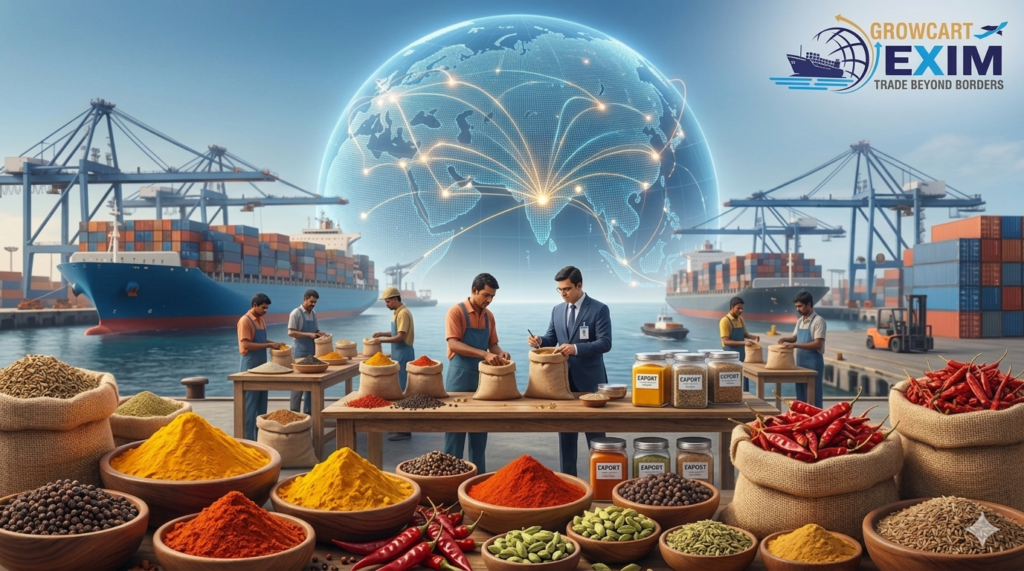
Overview of the Spice Export Market in India
India is the world's largest exporter of spices, supplying premium quality products to more than 180 countries. According to the Spices Board of India, the country exports over 75 varieties of spices, making it the most diverse spice-producing nation on Earth. The industry is not only vast but highly dynamic, continuously evolving with changing global consumer preferences and trade policies.
Key Growth Drivers
1. Rising Health and Wellness Awareness Consumers across developed and developing economies are shifting decisively toward natural, organic, and functional food products. Spices like turmeric, ginger, cinnamon, and black pepper are increasingly used in health supplements, herbal teas, nutraceuticals, and traditional medicine. This wellness movement has dramatically boosted global demand for Indian spices beyond the culinary segment.
2. Global Culinary Demand The internationalization of Indian cuisine has been nothing short of phenomenal. Diaspora communities in the USA, UK, Canada, and Australia have created thriving local markets for authentic Indian spices. Additionally, food enthusiasts and professional chefs worldwide are increasingly experimenting with Indian flavors, driving demand in mainstream retail channels.
3. Expanding Food Processing Industry Spices are indispensable to the global food processing sector, used extensively for flavoring, natural coloring, and preservation of a wide range of products. This creates a consistent, high-volume B2B demand from manufacturers of processed foods, condiments, snack foods, and beverages.
4. Organic and Premium Segment Growth The organic spice market is one of the fastest-growing segments in global trade. Buyers in Europe and North America are willing to pay significant premiums for certified organic, single-origin, and traceable spices. This creates higher-margin opportunities for Indian exporters who invest in organic certification and quality assurance.
Market Highlights at a Glance
- Top importing countries: USA, UAE, UK, China, Bangladesh, Sri Lanka, Germany
- Trending products: Organic spices, spice blends, value-added products, single-origin varieties
- Business opportunity: High profit margins driven by quality differentiation and niche positioning
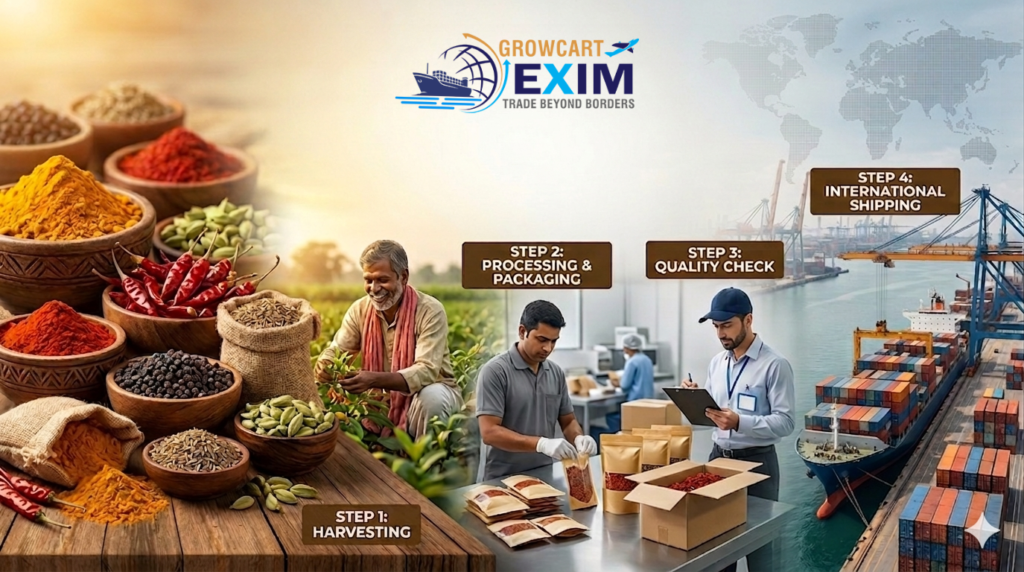
Step-by-Step Process to Export Spices from India
Conduct Thorough Market Research and Select Your Product
Every successful export business begins with rigorous market research. Without a clear understanding of global demand patterns, competitive dynamics, and buyer preferences, even the highest quality products can struggle to find traction in international markets.
Begin by analyzing global demand trends using tools such as Google Trends, ITC Trade Map, and reports published by the Spices Board of India and APEDA. Identify which spices are experiencing the strongest demand growth in your target regions. For instance, turmeric has seen explosive demand in North America and Europe, driven by the wellness trend, while black pepper and cardamom remain perennial favorites in the Middle East.
Next, study your competitors, both domestic exporters and international suppliers. Understand their pricing strategies, quality certifications, packaging formats, and marketing approaches. This analysis will reveal gaps and opportunities that you can capitalize on. Consider focusing on niche segments such as certified organic spices, premium single-origin varieties, or innovative spice blends, as these command higher margins and face less price-based competition than bulk commodity trading.
Finally, identify the countries and buyer segments most aligned with your product offering. Different markets have vastly different requirements. The European Union, for example, has stringent pesticide residue limits and mandatory organic certification requirements, while markets in the Middle East and Southeast Asia may prioritize price competitiveness and volume.
Register Your Business and Obtain the Import Export Code (IEC)
To legally export spices from India, your business must be formally registered and compliant with all relevant regulations. This is a non-negotiable foundation for any export operation.
The most critical requirement is obtaining an Import Export Code (IEC), a unique 10-digit code issued by the Directorate General of Foreign Trade (DGFT). The IEC is mandatory for all exporters; no shipment can legally leave India without it. The application process is straightforward and can be completed online through the DGFT portal.
In addition to the IEC, you will need GST Registration to comply with India's tax framework and claim GST refunds on exported goods, a significant financial benefit that can substantially improve your cash flow. Regarding your business structure, evaluate whether a Proprietorship, Limited Liability Partnership (LLP), or Private Limited Company best suits your scale of operations and long-term growth ambitions.
Obtain All Required Licenses and Certifications
Since spices are food products, they are subject to food safety regulations both in India and in destination countries. Obtaining the right licenses and certifications is essential for market access and builds invaluable credibility with international buyers.
FSSAI License (Food Safety and Standards Authority of India): This license ensures that your products meet India's food safety standards. Many international buyers and retailers require suppliers to hold a valid FSSAI certification as a baseline quality assurance measure.
APEDA Registration (Agricultural and Processed Food Products Export Development Authority): APEDA registration is mandatory for exporters of agricultural products, including all varieties of spices. APEDA also provides exporters with valuable market intelligence, training programs, and financial assistance for quality upgradation.
Spice Board of India Registration: Registering with the Spices Board adds a significant layer of credibility to your export business. The Board provides industry support, facilitates participation in international trade fairs, and issues quality certificates that are recognized globally.
Additional Certifications to Consider:
- Organic Certification (e.g., USDA Organic, EU Organic) for premium market access
- ISO 22000 for food safety management systems
- HALAL Certification for Middle Eastern markets
- Kosher Certification for certain North American and European markets
Investing in these certifications not only opens doors to premium market segments but also provides a powerful competitive advantage over non-certified competitors.
Find Reliable International Buyers
Finding trustworthy buyers is one of the most challenging and consequential aspects of building a successful spice export business. The quality of your buyer relationships will directly determine your revenue stability, growth trajectory, and business reputation.
B2B Digital Platforms: Platforms such as Alibaba, IndiaMART, TradeIndia, and Global Sources allow you to showcase your product catalog to thousands of international buyers. Creating a detailed, professional profile with high-quality product images, certifications, and competitive pricing is essential to attracting serious inquiries.
International Trade Fairs: Participating in major food and spice trade fairs such as Gulfood (Dubai), SIAL (Paris), Anuga (Cologne), and the World Spice Congress gives you direct access to importers, distributors, and retail buyers from around the world. These events are invaluable for building relationships and understanding market trends firsthand.
Export Promotion Councils: Organizations like APEDA, the Spices Board, and the Federation of Indian Export Organisations (FIEO) regularly organize buyer-seller meets, trade delegations, and matchmaking events that can connect you directly with qualified international buyers.
Direct Digital Outreach: Building a professional website that clearly communicates your product range, certifications, quality standards, and production capabilities is increasingly important. Complement this with strategic use of LinkedIn for B2B outreach and email marketing to reach potential buyers directly.
Always conduct thorough due diligence before committing to any buyer. Verify their business registration, check references, and start with smaller trial orders before scaling up volumes.
Develop Your Pricing Strategy, Packaging, and Labeling
Your pricing strategy must accurately account for all costs while remaining competitive in global markets. The key cost components include raw material procurement, quality testing, packaging, export documentation, freight and insurance, customs duties, and your desired profit margin. Research prevailing international market prices through trade reports and competitor analysis to ensure your pricing is both profitable and competitive.
Packaging plays a critical dual role in spice exports. It must protect the product's quality and freshness throughout long international transit while simultaneously communicating your brand's quality and professionalism to buyers. Use moisture-proof, food-grade materials as a baseline. Options include vacuum-sealed pouches, multi-layer laminated pouches, airtight containers, and bulk sacks for commodity shipments. Premium packaging with an attractive design can significantly enhance your brand perception and justify higher price points.
Labeling requirements vary by destination country but generally must include the product name, country of origin, net weight, manufacturing and expiry dates, storage instructions, batch number, and complete exporter and importer details. Non-compliance with labeling regulations is one of the most common causes of shipment rejection, so always verify the specific requirements of your target market before finalizing your packaging design.
Prepare All Required Export Documentation
Accurate and complete documentation is the backbone of smooth international trade operations. Errors or omissions in export documents can result in costly delays, penalties, and even shipment rejection at the destination port.
The core documents required for spice exports from India include:
- Commercial Invoice Details the transaction value, buyer and seller information, and product specifications
- Packing List Itemizes the contents, weight, and dimensions of each package
- Bill of Lading or Airway Bill: The transport document issued by the shipping carrier
- Certificate of Origin Certifies that the goods are of Indian origin, required for preferential tariff treatment in many markets
- A fumigation certificate confirms that the goods have been treated to eliminate pests, which is mandatory for most importing countries
- Insurance Certificate Covers the shipment against loss or damage during transit
- APEDA Certificate Required for agricultural exports
- Phytosanitary Certificate Issued by the Plant Quarantine Authority, certifying that the spices are free from plant pests and diseases
Consider working with a licensed customs broker or export documentation specialist to ensure accuracy and efficiency in your paperwork processes.
Manage Shipping and Logistics Efficiently
Efficient logistics management is crucial to ensuring your spices reach their destination in perfect condition and on schedule. The two primary shipping modes are sea freight and air freight. Sea freight is the most cost-effective option for large shipments and is the industry standard for bulk spice exports. Air freight is significantly more expensive but appropriate for time-sensitive, high-value, or small volume shipments.
Partner with experienced and reputable freight forwarders who have specific expertise in handling food products and navigating the customs regulations of your target markets. Proper storage conditions during transit, particularly temperature and humidity control, are essential to preserving spice quality. Implement a robust shipment tracking system to monitor your consignments in real time and proactively address any transit issues.
Secure Your International Payments
Payment security is a critical concern in international trade, particularly when dealing with new or unverified buyers. The most secure payment method for exporters is an advance payment, where the buyer transfers funds before shipment. This eliminates payment risk entirely but may be difficult to negotiate with established buyers.
A Letter of Credit (LC) issued by the buyer's bank provides an excellent balance of security and flexibility, guaranteeing payment upon submission of compliant shipping documents. Other common methods include Documents Against Payment (DAP) and Documents Against Acceptance (DA), which offer varying degrees of security. Open Account terms should be reserved exclusively for long-established, trusted buyer relationships, given the higher risk involved.
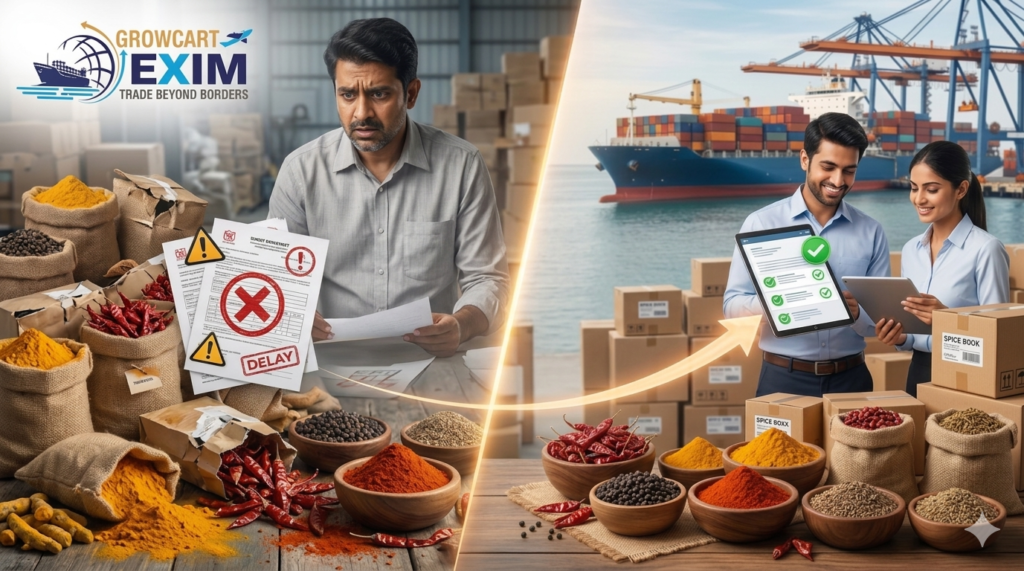
Overcoming Key Challenges in Spice Export
The spice export business, while highly rewarding, comes with its share of challenges. Stringent international quality and pesticide residue standards require continuous investment in quality control systems, testing infrastructure, and supplier management. Price volatility can be managed through forward contracts and diversified supplier networks. Complex documentation processes become more manageable with experienced support and digital documentation tools. Logistics delays can be minimized through reliable freight partnerships and proactive shipment monitoring.
Conclusion: Growcart Exim’s Expertise in Exporting Spices from India
Exporting spices from India is not just a business opportunity; it is a gateway to participating in a globally thriving market driven by quality, authenticity, and demand. At Growcart Exim, we believe that success in spice exports comes from a perfect blend of compliance, quality assurance, and strategic execution.
By following a structured spice export process, ensuring proper documentation and licensing, and maintaining stringent quality standards, we help businesses build a strong foundation in international trade. Our expertise in sourcing premium spices, managing efficient logistics, and connecting with global buyers ensures a smooth and profitable export journey.
Our mission is clear: to deliver high-quality Indian spices to the world while empowering exporters with transparency, reliability, and end-to-end support. When you partner with Growcart Exim, you choose a trusted pathway to success in the global spice export market, where every shipment reflects excellence and trust.
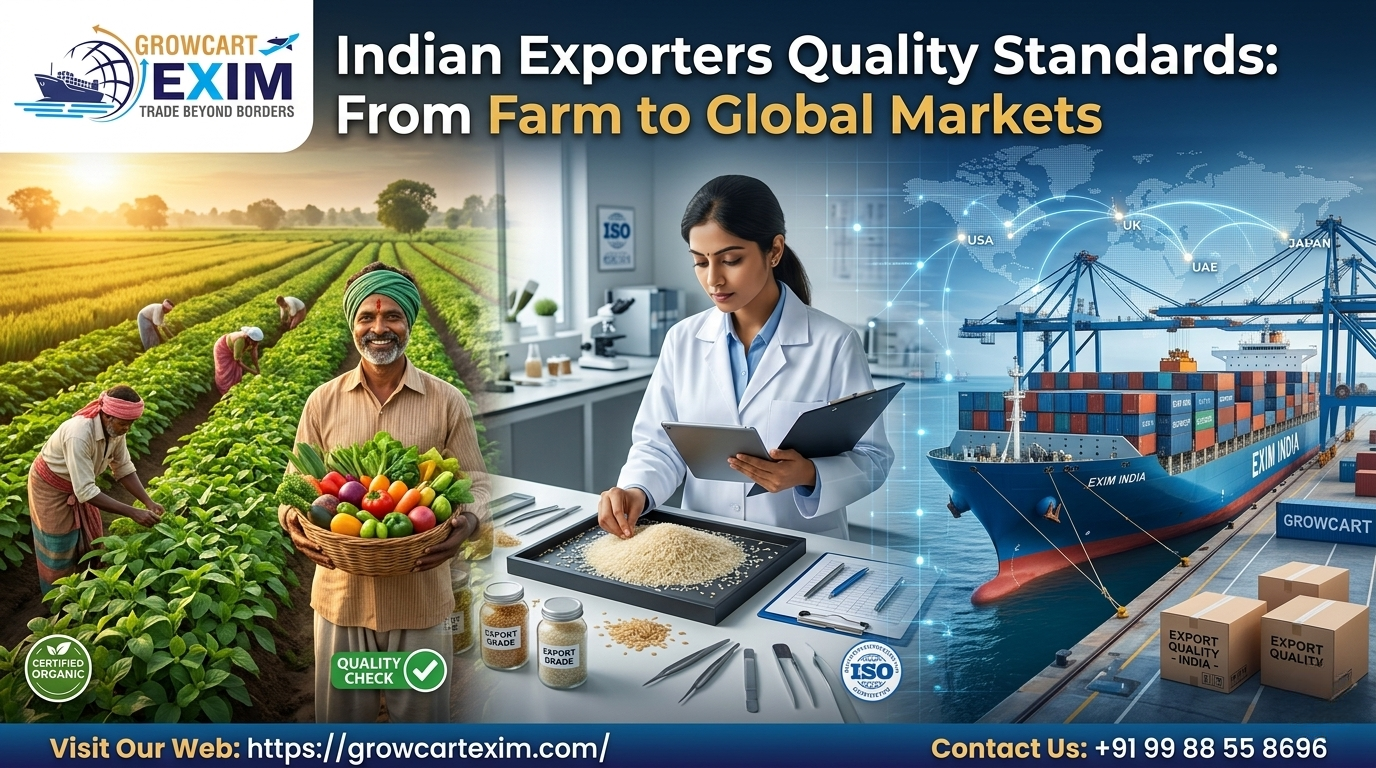
>> Also Read: Farm-to-Port Process: Ensuring Quality in Agro Exports
FAQs:
1. What documents are required to export spices from India?
You need a commercial invoice, packing list, bill of lading, certificate of origin, fumigation certificate, and insurance documents.
2. How can beginners export spices from India?
Start with business registration, obtain an IEC code, get FSSAI and APEDA licenses, and connect with international buyers.
3. Is APEDA registration mandatory?
Yes, APEDA registration is essential for exporting agricultural products, including spices.
4. Which spices are most profitable for export?
Turmeric, cumin, black pepper, cardamom, and chili are highly profitable.
5. What is the best way to find buyers?
Use B2B platforms, attend trade fairs, and connect directly with importers online.
0 Comments