

Best Basmati Rice Exporters from India
India is often referred to as the “Land of Spices” and the “Rice Bowl of the World.” When it comes to aromatic, long-grain rice, no other nation compares to India’s legacy of producing Basmati rice. For global importers, distributors, and wholesale buyers, sourcing this premium commodity requires more than just finding a seller; it requires finding a partner who understands quality, consistency, and the complexities of international trade.
If you are searching for the best basmati rice exporters from India, you have come to the right place. In this guide, we will explore why Indian Basmati dominates the global market, how to identify trusted rice exporters in India, and how Growcart Exim simplifies the entire supply chain from sourcing to final delivery.
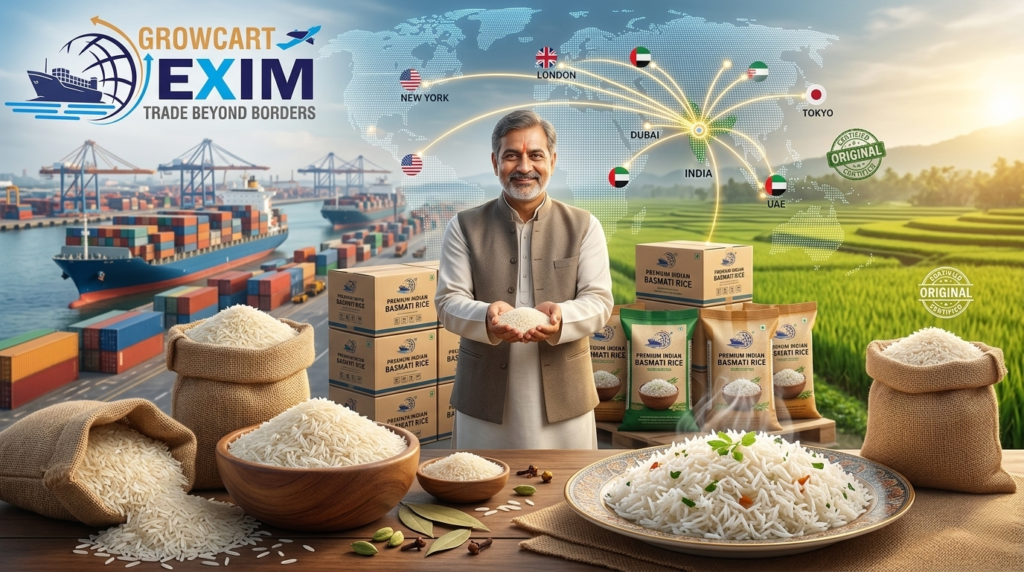
Why Basmati Rice from India is Globally Popular
Basmati, meaning “the fragrant one” in Sanskrit, is a variety of long-grain rice famous for its distinct aroma, delicate flavor, and fluffy texture. While several countries attempt to cultivate this grain, India produces over 70% of the world’s Basmati rice, primarily in the foothills of the Himalayas.
The global demand for basmati rice continues to surge due to the growing popularity of Indian cuisine, the rise in health-conscious consumers seeking low glycemic index foods, and the increasing number of South Asian diaspora communities worldwide.
As a result, Indian rice export companies have stepped up to meet this demand, adhering to strict international quality standards. Whether you are a supermarket chain in the Middle East, a restaurant owner in Europe, or a distributor in North America, sourcing from Indian Basmati rice exporters ensures you receive a product that is synonymous with excellence.
Key Qualities of Premium Basmati Rice
Before diving into the export process, it is essential to understand what separates premium Basmati rice from generic long-grain varieties. When sourcing from premium basmati rice exporters in India, look for these defining characteristics:
- Grain Length: Authentic Basmati grains elongate to nearly twice their dry size after cooking, typically ranging from 6.61 mm to over 8.30 mm.
- Aroma: A natural, nutty scent caused by the presence of 2-acetyl-1-pyrroline (a compound that gives Basmati its unique fragrance).
- Texture: The grains remain separate, non-sticky, and fluffy after cooking.
- Aging: Premium quality Basmati is often aged for 1 to 2 years to enhance flavor and texture.
- Purity: Authentic varieties include traditional strains like Basmati 370, Pusa Basmati 1121, and Basmati 386.
Export quality basmati rice must also meet strict international phytosanitary standards and packaging requirements, which reputable exporters handle meticulously.
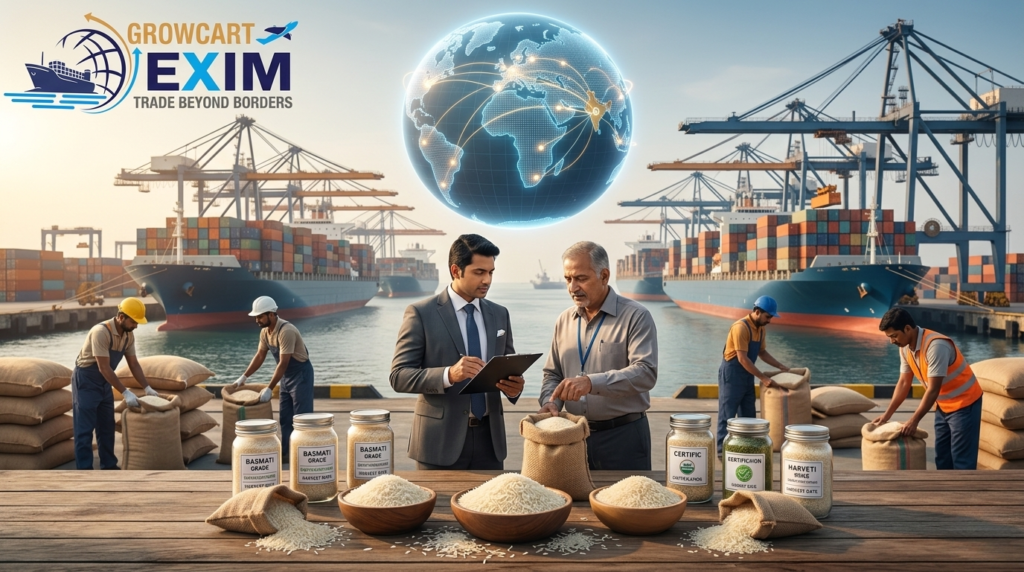
How to Choose the Best Basmati Rice Exporters from India
With hundreds of exporters operating in the Indian market, selecting the right partner can be overwhelming. To ensure you are dealing with the best basmati rice exporters from India, consider the following criteria:
1. APEDA Registration
The Agricultural and Processed Food Products Export Development Authority (APEDA) regulates the export of agricultural products in India. Always verify that the exporter is an APEDA - registered rice exporter. This certification ensures compliance with quality standards and allows for smooth customs clearance.
2. Consistency in Quality
The top basmati rice suppliers in India maintain strict quality control measures. They operate modern milling units, sorting machines, and laboratory testing facilities to ensure every batch meets specifications.
3. Customization and Packaging
Global buyers require specific packaging, whether it’s 1kg poly pouches for retail, 5kg jute bags for premium markets, or 25kg non-woven bags for bulk. Reliable exporters offer customized branding and packaging solutions.
4. Supply Chain Capability
For Indian basmati rice exporters for bulk buyers, the ability to supply large volumes consistently without delays is crucial. Look for exporters with robust procurement networks and warehousing capacity.
5. Transparent Documentation
The rice export documentation India requires includes phytosanitary certificates, certificates of origin, bill of lading, and APEDA registration details. A professional exporter handles all paperwork seamlessly.

Top Reasons to Work with Trusted Exporters
Partnering with trusted rice exporters in India offers numerous advantages that go beyond just the product itself:
- Risk Mitigation: Avoid fraudulent suppliers and substandard goods.
- Regulatory Compliance: Ensure shipments meet the import regulations of your country.
- Cost Efficiency: Benefit from competitive pricing due to direct sourcing from farms and mills.
- Scalability: Ability to scale orders up or down based on market demand without compromising quality.
- Peace of Mind: Focus on your core business marketing and distribution while the exporter handles sourcing, quality, and logistics.
Role of Growcart Exim in Global Rice Export
Navigating the complexities of international trade can be challenging. This is where Growcart Exim steps in. As a premier partner for global businesses, we do not just sell rice; we manage the complete export ecosystem.
We position ourselves as one of the best basmati rice exporters from India by offering end-to-end solutions tailored to the needs of importers, wholesalers, and distributors worldwide. Here is how we add value:
Sourcing
We work directly with trusted farming communities and state-of-the-art mills across the Basmati-growing regions of Punjab, Haryana, and Uttar Pradesh. This direct relationship ensures that we procure only the finest grains at competitive prices.
Quality Control
Quality is non-negotiable. We implement rigorous checks, including:
- Physical analysis: Grain length, color, and uniformity.
- Chemical analysis: Testing for pesticide residues, moisture content, and aflatoxins.
- Grading: Sorting using color sorters to remove discolored or broken grains.
Packaging Solutions
Whether you require export-quality basmati rice in consumer packs or bulk packaging, we provide:
- Non-woven fabric bags for bulk exports.
- Jute/sacks for traditional markets.
- Poly pouches with custom branding for retail.
- Vacuum packaging to preserve freshness for long-distance shipments.
Logistics and Warehousing
We understand that timely delivery is critical. Our logistics network includes:
- Strategic warehousing near major ports (Mundra, Nhava Sheva, Chennai).
- Coordination with shipping lines for FCL (Full Container Load) and LCL (Less than Container Load) shipments.
- Real-time tracking to keep you informed of your shipment’s status.
Final Delivery
Our responsibility does not end at the port. We handle all export documentation, insurance, and customs clearance to ensure smooth delivery to your destination. From farm to fork, Growcart Exim ensures a seamless supply chain.
Export Process of Basmati Rice from India (Step-by-Step)
For global buyers, understanding the rice export business in India helps in setting realistic timelines and expectations. Here is a step-by-step breakdown of how a typical export order is processed:
Step 1: Inquiry and Quotation
The buyer shares their requirements (variety, quantity, packaging, destination). Growcart Exim provides a detailed quotation including FOB (Free on Board) or CIF (Cost, Insurance, Freight) pricing.
Step 2: Contract Signing
A Sales Contract is signed detailing specifications, price, payment terms (typically Letter of Credit or advance payment), and delivery schedule.
Step 3: Procurement and Processing
Upon receiving the advance payment or LC confirmation, we procure the paddy or raw rice from our partner mills. The rice is milled, polished, and sorted to meet the required specifications.
Step 4: Quality Assurance
Samples from the production batch are tested in our in-house labs or third-party labs (like SGS or Bureau Veritas) to ensure compliance with the contract.
Step 5: Packaging and Warehousing
The finished product is packed according to the buyer’s branding requirements. Goods are then moved to our warehouse near the port to await shipment.
Step 6: Documentation and Pre-Shipment Inspection
We prepare all necessary documents:
- Phytosanitary Certificate
- Certificate of Origin
- APEDA Registration Certificate
- Bill of Lading/Airway Bill
- Packing List and Commercial Invoice
Pre-shipment inspection is conducted by the buyer’s nominated agency or government authorities if required.
Step 7: Customs Clearance and Loading
We file the Shipping Bill with Indian Customs. Once cleared, the container is loaded onto the vessel at the port.
Step 8: Shipping and Delivery
The vessel departs for the destination port. We share the tracking details and final documents with the buyer for customs clearance at the destination.
Step 9: Final Delivery
Upon arrival, the buyer clears the goods through their local customs. For CIF shipments, we coordinate until the container is delivered to the buyer’s warehouse.
Benefits of Importing Basmati Rice from India
Choosing to import from Indian rice export companies offers distinct business advantages:
- High Profit Margins: Due to competitive pricing and high global demand, Basmati rice offers excellent ROI for importers.
- Product Differentiation: Offering authentic Indian Basmati sets your brand apart from competitors selling non-aromatic or hybrid varieties.
- Consistent Supply: India has a robust agricultural infrastructure, ensuring year-round availability despite seasonal harvests.
- Growing Market: The global rice market is projected to grow at a CAGR of 2.5% through 2030, driven by increasing consumption in non-traditional markets like Africa and Latin America.
Conclusion: Growcart Exim’s Commitment to Excellence in the Farm to Port Process in Agro Exports
When it comes to sourcing the best basmati rice exporters from India, the journey matters as much as the destination. The Farm to Port process in agro exports is more than just logistics it is a commitment to quality, safety, and global trust. At Growcart Exim, we understand that a reliable agro export quality process, a resilient agricultural supply chain, and meticulous quality inspection in agro exports are essential for long-term success in the international rice trade.
Through structured steps involved in the agro export process, strong agro product export quality control, and optimized cold chain logistics for exports, we ensure that every shipment of premium Basmati rice reflects excellence from the very first grain to the final delivery. Our approach integrates the best practices of Indian rice export companies with a deep understanding of what global importers, wholesalers, and distributors truly need: consistency, transparency, and timeliness.
Our mission is simple: to deliver premium export-quality agricultural products while strengthening India’s global agro trade reputation. Whether you are searching for top basmati rice suppliers in India, require wholesale basmati rice suppliers for bulk orders, or need a trusted partner to manage the complexities of rice export documentation in India, Growcart Exim stands ready to serve.
When you partner with Growcart Exim, you are choosing transparency, reliability, and a perfected from-farm-to-port agro export workflow that ensures quality at every step. We take pride in being counted among the trusted rice exporters in India who prioritize your business success as much as our own.
Ready to experience the Growcart Exim difference?
Contact us today to discuss your Basmati rice requirements. Let us handle the sourcing, quality control, packaging, and logistics so you can focus on growing your business with confidence.
Also Read: Step-by-Step Process to Export Spices from India to International Markets
Frequently Asked Questions (FAQs)
1. What documents are required to import Basmati rice from India?
To import Basmati rice, you typically need a Bill of Lading, Commercial Invoice, Packing List, Phytosanitary Certificate, Certificate of Origin, and the exporter’s APEDA registration details. Growcart Exim manages all this documentation on your behalf.
2. How do I verify if an exporter is APEDA registered?
You can verify APEDA registration on the official APEDA website using the exporter’s RCMC (Registration Cum Membership Certificate) number. All APEDA-registered rice exporters are listed in the government database.
3. What is the minimum order quantity (MOQ) for bulk buyers?
Most Indian basmati rice exporters for bulk buyers require a minimum of one full container (approximately 20 to 25 metric tons). However, Growcart Exim offers flexibility for smaller trial orders to help new buyers establish trust.
4. What is the difference between 1121 Basmati and traditional Basmati?
1121 Basmati is known for its extra-long grain (up to 8.4 mm cooked length) and high elongation ratio, making it ideal for biryani and presentation. Traditional Basmati (like Pusa or Taraori) offers a more intense aroma and is preferred for daily consumption and authentic dishes.
5. How long does the entire export process take?
From order confirmation to shipment, the process typically takes 15 to 25 days, depending on the quantity and packaging requirements. Sea freight transit time varies based on the destination, ranging from 15 days to 45 days.


0 Comments