
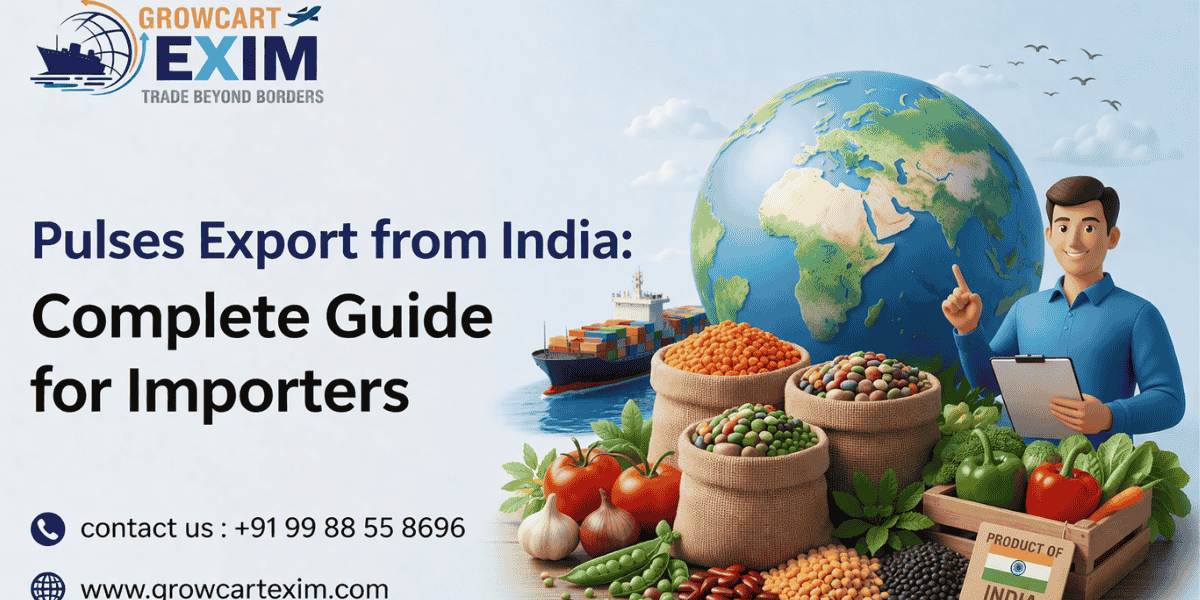
If you're looking to import pulses from India, you're tapping into one of the largest and most reliable agricultural markets in the world. India has long been a global leader in producing lentils, chickpeas, and beans, making pulses export from India a high-demand and strategically important trade segment.
In 2026, global buyers are increasingly choosing Indian pulses exporters due to competitive pricing, consistent quality, and a wide variety of options. Whether you’re a wholesaler, retailer, or food brand, sourcing from India offers both scalability and long-term supply stability.
Among the emerging and reliable exporters, Grocartexim stands out as a professional partner for sourcing high-quality pulses. With a focus on quality assurance, streamlined logistics, and international compliance, they represent the new generation of agro products suppliers in India that are making global trade smoother and more transparent.
This guide will walk you through everything from identifying trusted suppliers to understanding export procedures so you can confidently navigate the pulses export from India market.
What Makes Pulses Export from India Globally Competitive?
India dominates the global pulses ecosystem due to:
- Diverse production: Chickpeas, lentils, pigeon peas, mung beans
- Large supplier base: Thousands of pulses wholesale suppliers in India
- Government support: Export incentives and streamlined logistics
- Cost advantage: Competitive pricing vs. Canada & Australia
Top Exported Pulses from India
| Pulse Type | Export Demand |
| Chickpeas (Kabuli & Desi) | Very High |
| Red Lentils (Masoor Dal) | High |
| Yellow Lentils (Toor Dal) | High |
| Green Gram (Moong Dal) | Medium |
| Black Gram (Urad Dal) | Medium |
How to Choose the Right Supplier for Pulses Export from India
Selecting the right partner is one of the most critical decisions when dealing with pulses export from India. The supplier you choose directly impacts product quality, pricing, delivery timelines, and ultimately your profitability.
When evaluating agro products suppliers India, you need to go beyond price and look at long-term reliability, compliance, and scalability.
Key Factors to Evaluate Agro Products Suppliers in India
1. Certifications & Compliance (Non-Negotiable)
Reliable Indian pulses exporters must comply with international food safety and export standards.
Look for:
- FSSAI Certification – Ensures food safety standards in India
- APEDA Registration – Mandatory for agricultural exports
- ISO Certification – Indicates quality management systems
- HACCP / GMP (for advanced quality assurance)
Why it matters:
Certifications reduce import risks, ensure compliance with your country’s regulations, and build trust with your customers.
2. Export Experience & Market Reputation
Not all Indian food exporters have the same level of experience.
Evaluate:
- Years in the export business
- Countries they export to
- Client testimonials or case studies
- Presence on B2B platforms
Pro Insight:
Experienced exporters understand customs regulations, documentation, and international quality expectations, reducing delays and costly mistakes.
3. Packaging Capabilities (Bulk & Private Label)
Packaging plays a major role in branding, logistics, and product safety.
Check if the supplier offers:
- Bulk packaging (25kg / 50kg bags)
- Retail-ready packaging (1kg / 5kg branded packs)
- Private labeling services
- Moisture-proof and export-grade materials
Why it matters:
If you're building your own brand, packaging flexibility is essential when working with wholesale pulse suppliers in India.
4. Logistics & Supply Chain Support
Efficient logistics is a key component of successful pulses export from India.
Evaluate:
- Access to major ports (Nhava Sheva, Mundra, Chennai)
- Freight forwarding partnerships
- Ability to handle FOB/CIF shipments
- Shipment tracking support
Pro Tip:
Suppliers with integrated logistics support can reduce transit time and improve delivery reliability.
5. Quality Grading & Consistency
Consistency is crucial when sourcing from agro products suppliers in India.
Check for:
- Sorting and grading systems
- Machine-cleaned vs hand-cleaned pulses
- Moisture control standards
- Lab testing reports
Why it matters:
Inconsistent quality can damage your brand reputation and lead to rejected shipments.
Step-by-Step Process to Import Pulses from India
1. Identify Reliable Indian Pulses Exporters
- Use B2B platforms
- Attend trade fairs
- Request samples
2. Verify Certifications
Ensure the supplier has:
- APEDA registration
- Phytosanitary certificate
- Fumigation certificate
3. Request Quotation (RFQ)
Include:
- Quantity
- Packaging
- Destination port
- INCOTERMS (FOB, CIF)
4. Finalize Pricing & Contract
Negotiate:
- Payment terms (LC, TT)
- Delivery timeline
- Quality specs
5. Documentation for Export
| Document | Purpose |
| Commercial Invoice | Billing |
| Packing List | Shipment details |
| Bill of Lading | Transport proof |
| Certificate of Origin | Trade compliance |
| Phytosanitary Certificate | Health safety |
6. Shipping & Logistics
- Sea freight (most common)
- Air freight (urgent orders)
Pricing Trends in Pulses Export from India (2026)
Pricing depends on:
- Crop yield
- Weather conditions
- Global demand
- Currency exchange
Average Export Price Range (2026)
| Pulse | Price (USD/MT) |
| Chickpeas | $700–$1100 |
| Lentils | $600–$900 |
| Moong Dal | $900–$1300 |
| Urad Dal | $800–$1200 |
Comparison: India vs Other Pulses Exporting Countries
| Factor | India | Canada | Australia |
| Price | Competitive | High | Medium |
| Variety | Wide | Limited | Moderate |
| Supply Stability | High | High | Medium |
| Customization | High | Low | Medium |
Conclusion:
For flexibility and pricing, pulses export from India is often the best choice.
Who Should Import Pulses from India?
1. Food Brands
- Private label packaging
- Organic product lines
2. Wholesalers & Distributors
- Bulk procurement
- Cost advantage
3. Retail Chains
- Direct sourcing
- Better margins
Case Study Example
A Middle Eastern distributor shifted to Indian pulses exporters and reduced procurement costs by 18% while improving supply consistency.
Types of Pulses Offered by Growcart Exim
Growcart Exim exports a focused range of high-demand, globally traded pulses, suitable for wholesale, retail, and food processing industries.
Main Pulse Varieties
1. Toor Dal (Pigeon Peas)
- One of the most widely exported pulses
- High demand in the Middle East & Asian markets
- Rich in protein and commonly used in daily diets
2. Chana Dal (Split Chickpeas)
- Available in Desi variety
- Ideal for snacks, flour (besan), and cooking
- Strong global demand due to versatility
3. Masoor Dal (Red Lentils)
- Fast-cooking and widely consumed globally
- Popular in Europe, Asia, and Africa
- High nutritional value (protein + iron)
4. Moong Dal (Green Gram)
- Easy to digest and premium category pulse
- Used in health foods and organic products
- Growing demand in the fitness and vegan markets
5. Urad Dal (Black Gram)
- Key ingredient in South Asian cuisines
- Used in processed foods (idli, dosa batter)
- High export demand for food processing industries
Pulses Export from India (2026)
1. Global Leadership in Production
- India is the largest producer of pulses globally
- Supplies major varieties like chickpeas, lentils, and pigeon peas
- Strong foundation for reliable pulses export from India
2. Competitive Pricing Advantage
- Lower production and labor costs
- Bulk availability reduces per-unit price
- Makes pulses export from India more affordable than many competitors
3. Wide Variety of Pulses
- Offers multiple options, including:
- Chickpeas (Kabuli & Desi)
- Lentils (Masoor Dal)
- Moong Dal, Urad Dal, Toor Dal
- Suitable for different global markets and cuisines
4. Strong Export Ecosystem
- Presence of experienced Indian pulses exporters
- Large network of agro products suppliers in India
- Efficient logistics and port infrastructure
5. Growing Global Demand
- Rising demand for plant-based protein
- Increasing consumption in health-conscious markets
- Expanding opportunities in pulses export from India
How AI Can Simplify the Pulses Import Process
AI tools can help importers:
- Supplier discovery (AI-powered sourcing platforms)
- Price prediction (market analytics tools)
- Document automation (export paperwork generation)
- Quality inspection via AI vision systems
Suggested Workflow
- Use AI tools to shortlist suppliers
- Automate RFQs
- Compare pricing dashboards
- Track shipments with predictive analytics
How to Optimize Your Buying Experience
To improve your sourcing experience:
- Choose suppliers with a fast response time
- Ensure mobile-friendly communication
- Request a sample before a bulk order
- Track shipments in real-time
Common Challenges in Pulses Import & Solutions
Importing pulses from India can be highly profitable, but like any global trade activity, it comes with certain challenges. Understanding these risks and how to manage them can help importers avoid costly mistakes and build a stable supply chain.
Challenge 1: Quality Inconsistency
One of the most common issues faced by importers is variation in product quality between shipments. This may include differences in grain size, color, moisture levels, or the presence of impurities such as stones or damaged grains. Such inconsistencies can impact your brand reputation and even lead to rejection at the destination port.
Solution:
Always request a pre-shipment inspection (PSI) from either a third-party inspection agency or your own quality team. Additionally, ask suppliers for:
- Product samples before confirming the order
- Lab test reports (moisture, purity levels)
- Clear quality specifications in the contract
Working with suppliers who follow strict grading and sorting processes ensures long-term consistency.
Challenge 2: Delayed Shipments
Delays in shipment are another major concern in pulse imports. These can occur due to port congestion, poor logistics planning, documentation issues, or a lack of exporter experience. Delayed deliveries can disrupt your inventory planning and lead to financial losses, especially if you operate in retail or distribution.
Solution:
Partner with an experienced merchant exporter in India who has:
- Strong logistics network and freight forwarding partners
- Access to major export ports like Nhava Sheva or Mundra
- Proven track record of on-time delivery
Also, clearly define delivery timelines and penalties (if applicable) in your contract. Regular shipment tracking and communication with the exporter can further reduce uncertainty.
Challenge 3: Documentation Errors
International trade requires precise documentation, and even minor errors can lead to shipment delays, customs clearance issues, or additional costs. Missing or incorrect documents, such as invoices, packing lists, or phytosanitary certificates, can create serious complications at the destination.
Solution:
Use automated export documentation tools or work with exporters who have dedicated export teams. Ensure:
- All documents are verified before shipment
- Details match exactly across all paperwork
- Compliance with both Indian export regulations and your country’s import requirements
Digital tools and experienced exporters can significantly reduce human errors and streamline the entire process.
By proactively addressing these challenges, importers can build a more reliable and efficient sourcing strategy. Choosing the right partner, such as Growcartexim, known for its quality control and smooth export processes, can further minimize risks and ensure a hassle-free importing experience.
Conclusion
Pulse export from India continues to be one of the most reliable and profitable sourcing opportunities for global importers in 2026. With its unmatched combination of wide product variety, competitive pricing, strong supply chains, and government-backed export systems, India remains a preferred destination for businesses looking to scale efficiently.
However, success in importing pulses depends largely on choosing the right supplier, ensuring compliance with international standards, and maintaining consistency in quality and logistics. By following a structured sourcing process and leveraging modern tools like AI for supplier selection and price tracking, importers can significantly reduce risks and improve profitability.
As global demand for plant-based protein continues to rise, the future of pulse exports from India looks even more promising. Partnering with a reliable exporter can make all the difference Growcartexim stands out as a trusted partner for quality pulses, seamless logistics, and dependable global supply.
Frequently asked questions
1. How to import pulses from India?
To import pulses, identify suppliers, verify certifications, negotiate terms, and complete export documentation before shipping.
2. Who are the best Indian pulses exporters?
Top exporters are those with APEDA certification, strong logistics support, and consistent quality standards.
3. What documents are required for pulses export?
Key documents include the invoice, packing list, bill of lading, certificate of origin, and phytosanitary certificate.
4. What is a merchant exporter in India?
A merchant exporter sources goods from manufacturers and exports them to international buyers.
5. Are pulse exports from India profitable?
Yes, due to competitive pricing and global demand, pulses export from India offers strong profit margins.
6. Which pulses are most exported from India?
Chickpeas, lentils, and pigeon peas are the most exported.
7. How to find agro products suppliers in India?
Use B2B platforms, trade directories, and export promotion councils.
8. What is the minimum order quantity?
MOQ varies but typically ranges from 1–25 metric tons.
0 Comments